

The technology behind Dispersoil
Engineered nanofluids for targeted oilfield production chemistry.
U.S. Patent No. 10,557,077 B2
What it is
Dispersoil is based on dispersions of inorganic particles below 100 nm. Each formulation is matched to the crude characteristics and operating conditions of the well.
Keep asphaltenes and paraffins dispersed, preventing precipitation
Reduce interfacial tension and modify rock wettability
Interact with organic components of the crude
Support crude mobility in the fluid
How it acts
Particle-scale interaction supports a controlled sequence from organic dispersion to production flow.
Interact with organics
Target asphaltenes and paraffins in the crude.
Stabilize dispersion
Keep organic material suspended in the fluid.
Improve crude mobility
Support movement of the treated crude.
Support production flow
Aid flow through the near-wellbore and production system.
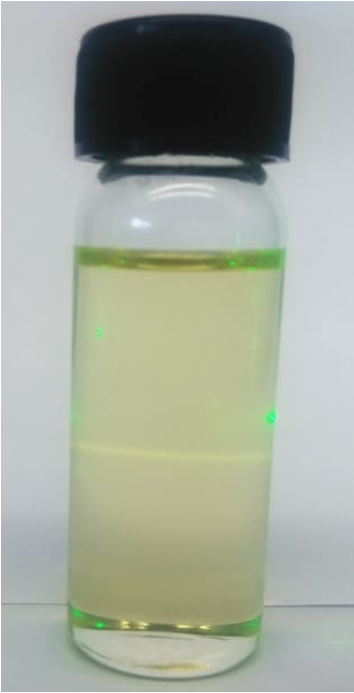
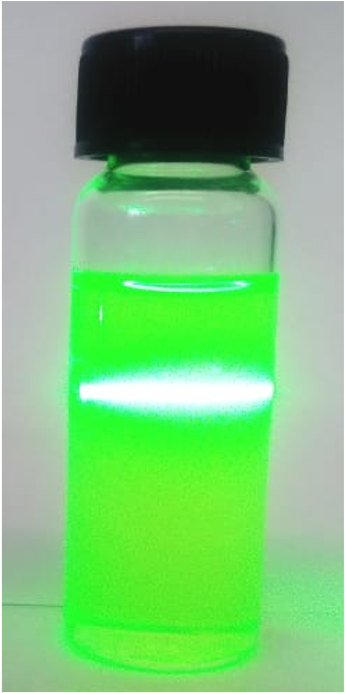
Nanodispersion you can see
A stable colloidal dispersion of particles below 100 nm scatters a laser beam through the fluid. This Tyndall effect is a direct, observable physical indicator of nanoscale dispersion.
Technical characteristics
Particles below 100 nm
Formulated per well
Patent-protected composition
Applicable to heavy-to-light crudes; documented on 28–40° API in carbonate formations
United States Patent
10,557,077 B2
Protected composition. Practical field intent.
Core composition protected under U.S. Patent No. 10,557,077 B2. The patent anchors the underlying formulation while each application is designed around the well.
Bring us your well problem
Send us your production challenge and crude characteristics. We'll assess technical fit and propose a path forward.
Request a technical evaluation