
Nanofluid-based paraffin inhibitor
Dispersoil nanofluid chemistry is designed to keep paraffin and wax dispersed in the crude, targeting the deposits that restrict tubing, flowlines and the near-wellbore.
U.S. Patent No. 10,557,077 B2
What paraffin deposition is
Paraffin and wax fractions dissolve in hot crude at reservoir conditions. As the crude cools along the production path, these fractions crystallize and adhere to tubing, flowline walls and surface equipment. The deposit builds layer by layer, narrowing the effective flow area and progressively restricting production.
- Crystallizes as crude cools below its wax appearance temperature
- Builds on tubing, flowlines and surface production equipment
- Narrows the effective flow area over time
- Often co-deposits with asphaltenes and other organic solids
Organic solids forming on tubing and flowline walls as crude cools along the production path.
How a Dispersoil paraffin inhibitor is designed to address it
Rather than dissolving deposits after they form, the nanofluid approach acts on the organic fractions while they are still in the fluid.
Interact with paraffins
Sub-100 nm particles interact with paraffin and wax fractions in the crude.
Keep solids dispersed
Organic material is held in suspension instead of adhering to pipe walls.
Support crude mobility
A more uniform fluid moves more freely through the production path.
Protect the flow path
Designed to reduce organic-solid adhesion along the flow path.

Where it applies
The technology is applicable to heavy-to-light crudes. Field documentation is specific: Dispersoil nanofluid technology is documented in field operations on medium-to-light crudes (28–40° API) in carbonate formations, typical of conventional Permian Basin production in Texas.
Applicable to heavy-to-light crudes
Tubing and flowline paraffin control
Near-wellbore organic-deposit restriction
Preventive and corrective treatment programs
How we evaluate a case
Every treatment starts with crude and deposit sampling, laboratory screening and compatibility testing, and a baseline with success criteria agreed before anything is pumped. For paraffin and wax cases we run UOP 46-85 (Paraffin Wax Content of Petroleum Oils and Asphalts) for characterization, alongside compatibility screening per API RP 42. Applying product is not itself success.
See the full evaluation process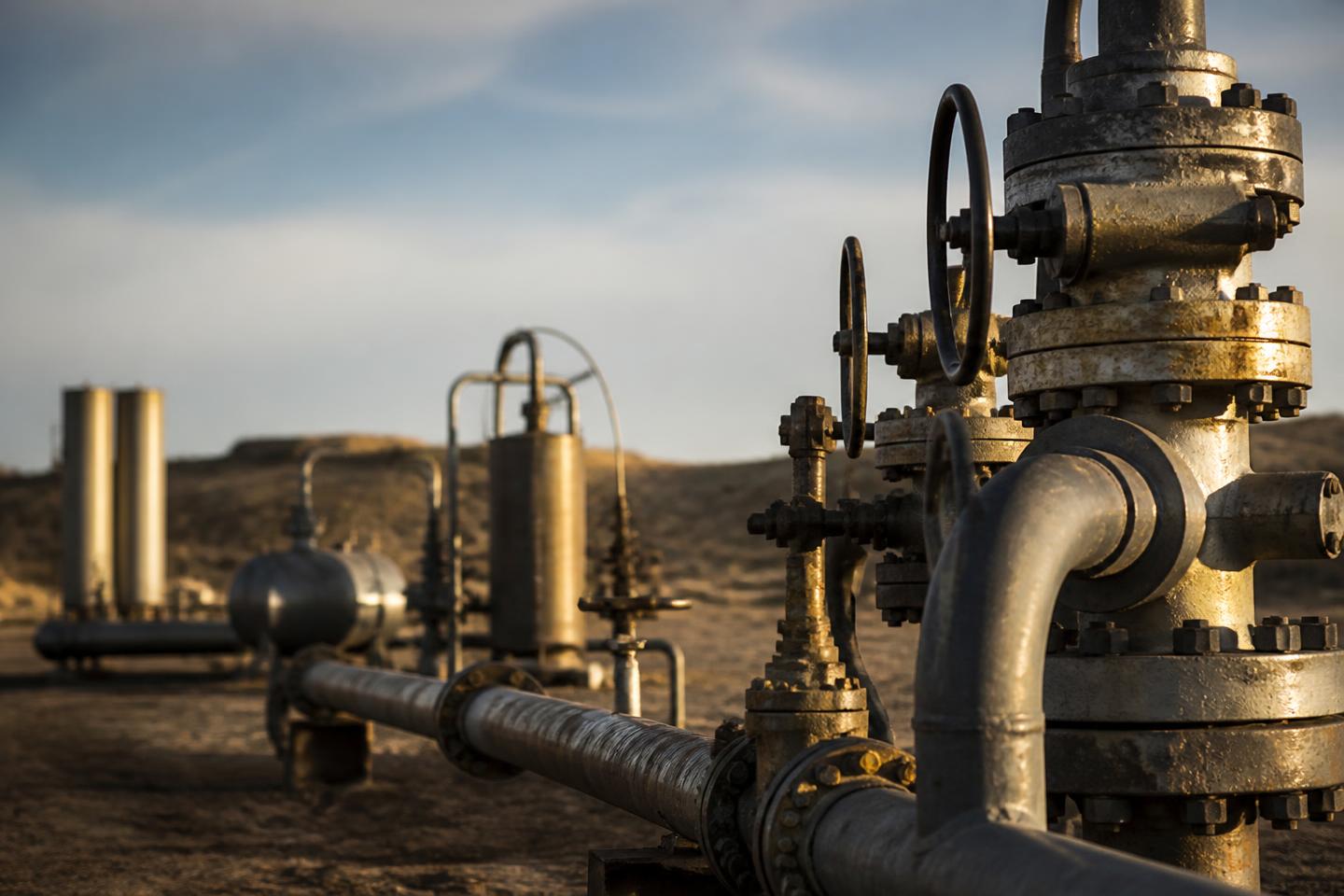
Bring us your well problem
Send us your production challenge and crude characteristics. We'll assess technical fit and propose a path forward.
Request a technical evaluation