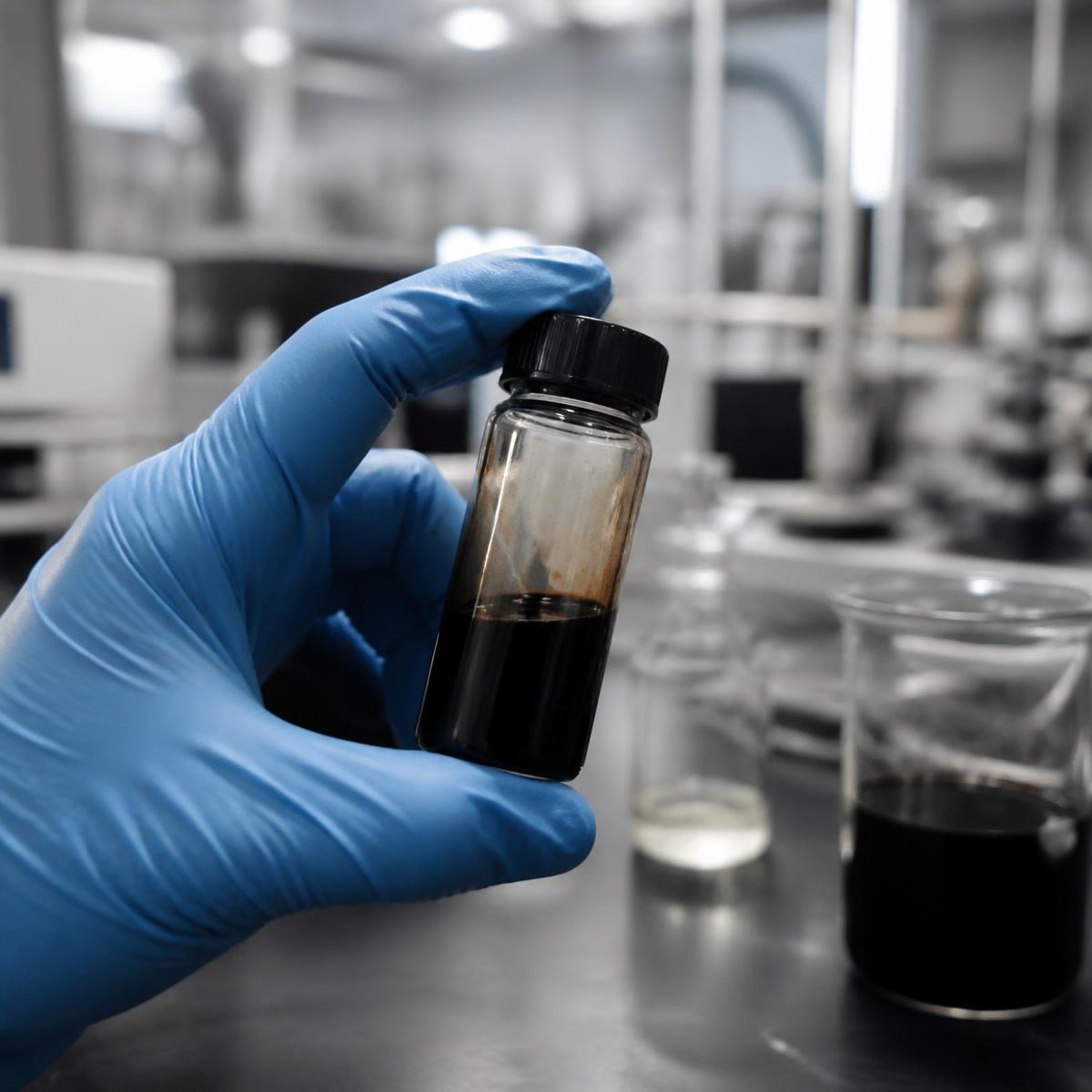
Asphaltene deposition
Precipitation of asphaltenic fractions and their buildup in the near-wellbore, tubing and surface lines, progressively restricting flow.

Production problems caused by organic deposits and restricted crude flow in conventional oil wells.
U.S. Patent No. 10,557,077 B2
Each formulation is designed around a specific mechanism of restriction. These are the problems the technology is built to target.
Precipitation of asphaltenic fractions and their buildup in the near-wellbore, tubing and surface lines, progressively restricting flow.
Organic solids forming on tubing and flowline walls as crude cools along the production path.
Heavy, hard-to-move crude whose viscosity limits mobility through the production system.
Accumulated organic material narrowing flowlines and surface production equipment, reducing effective cross-section.
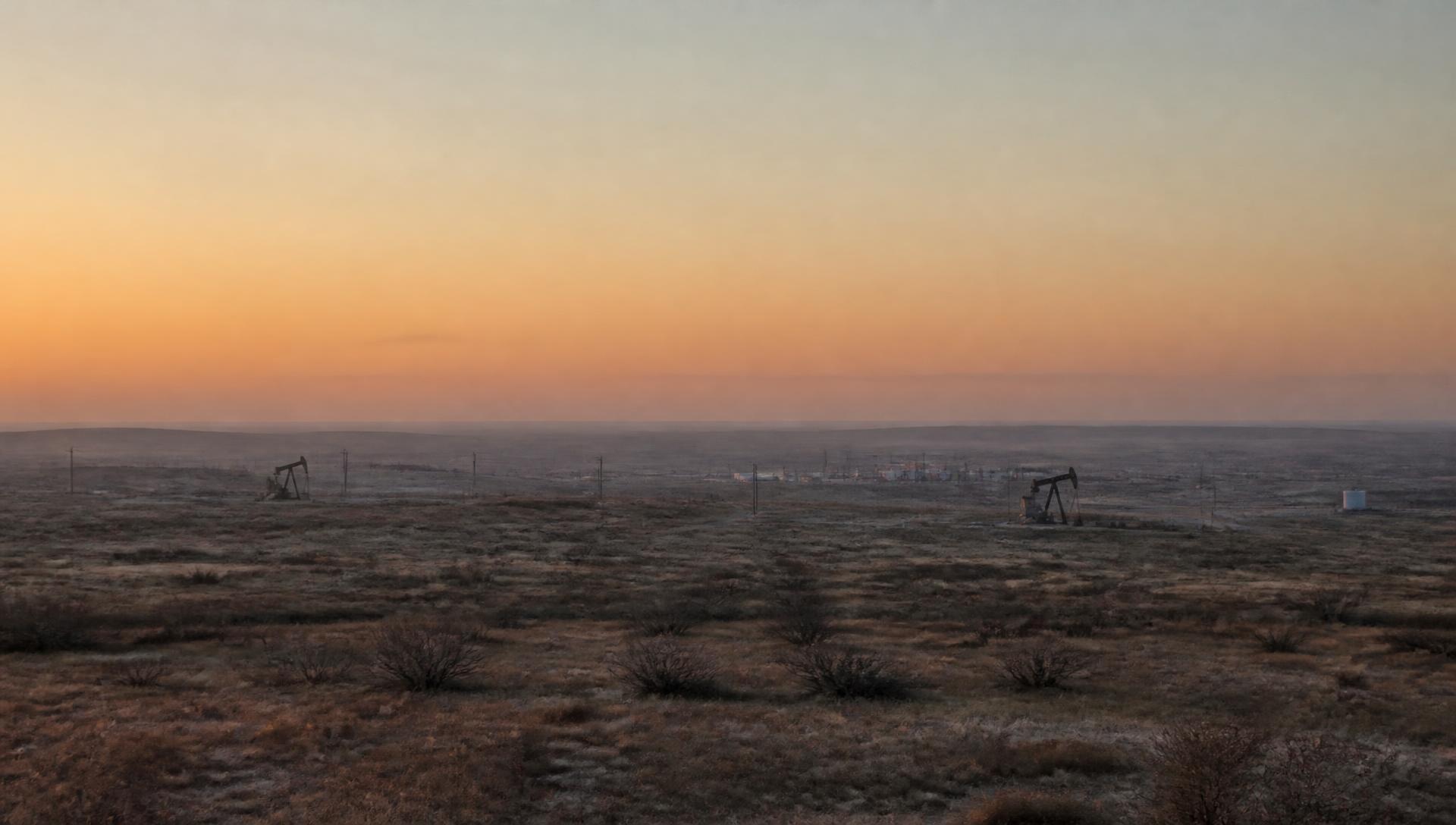
The technology is applicable to heavy-to-light crudes. Field documentation is specific: Dispersoil nanofluid technology is documented in field operations on medium-to-light crudes (28–40° API) in carbonate formations, the conditions of conventional Permian Basin production in Texas.
Applicable to heavy-to-light crudes
Field-documented on 28–40° API in carbonate formations
Conventional Permian Basin (Texas) focus
Near-wellbore and surface production systems
A pilot is evaluated against technical and economic criteria defined in advance. Applying product is not itself success.
Production history reviewed and the problem defined with the operator.
Representative samples of crude and deposited material are collected.
Formulation screening and compatibility work under laboratory conditions.
Baseline and acceptance criteria are agreed before any treatment.
Treatment design, logistics and safety planning with field personnel.
Execution, monitoring against the baseline, and a documented technical report.
Every well is different. Before any treatment, we screen the candidate against the conditions where Dispersoil nanofluid technology performs best. The strongest candidates share these traits.
Production
Declining production with signs of organic-deposit or wettability-driven restriction to inflow.
Deposit type
Asphaltene or paraffin deposition in the near-wellbore, tubing, or flowlines.
Crude
Applicable to heavy-to-light crude (approximately 16–40° API); field-documented on medium-to-light crudes (28–40° API). Compatibility confirmed by screening per API RP 42.
Formation
Carbonate formations are the field-documented case; sandstone reservoirs are within the applicable range. Primary focus: conventional Permian Basin targets in Texas.
Well condition
Sound mechanical condition: pumps, tubing, and gaskets in good working order.
Prior treatments
Recent history reviewed; some prior chemical or acid treatments can affect compatibility.
Screening criteria are qualitative and confirmed case by case through laboratory compatibility testing. Not every well is a fit — that is what the evaluation determines.
Send us your production challenge and crude characteristics. We'll assess technical fit and propose a path forward.
Request a technical evaluation